For a CFO in the Australian mid-market, an ERP overhaul is rarely just a tech upgrade. It’s a high-stakes exercise in risk management. Get it right, and you’ve built a scalable foundation for the next decade. Get it wrong, and you’re starring in the next "failed implementation" horror story.
The right ERP selection consulting services act as your insurance policy. But how do you make sure you’re hiring a strategic partner and not just a glorified software broker?
Here is the executive playbook for vetting consultants, specifically tailored for mid-sized manufacturing and distribution firms.
1. The "True Independence" Litmus Test
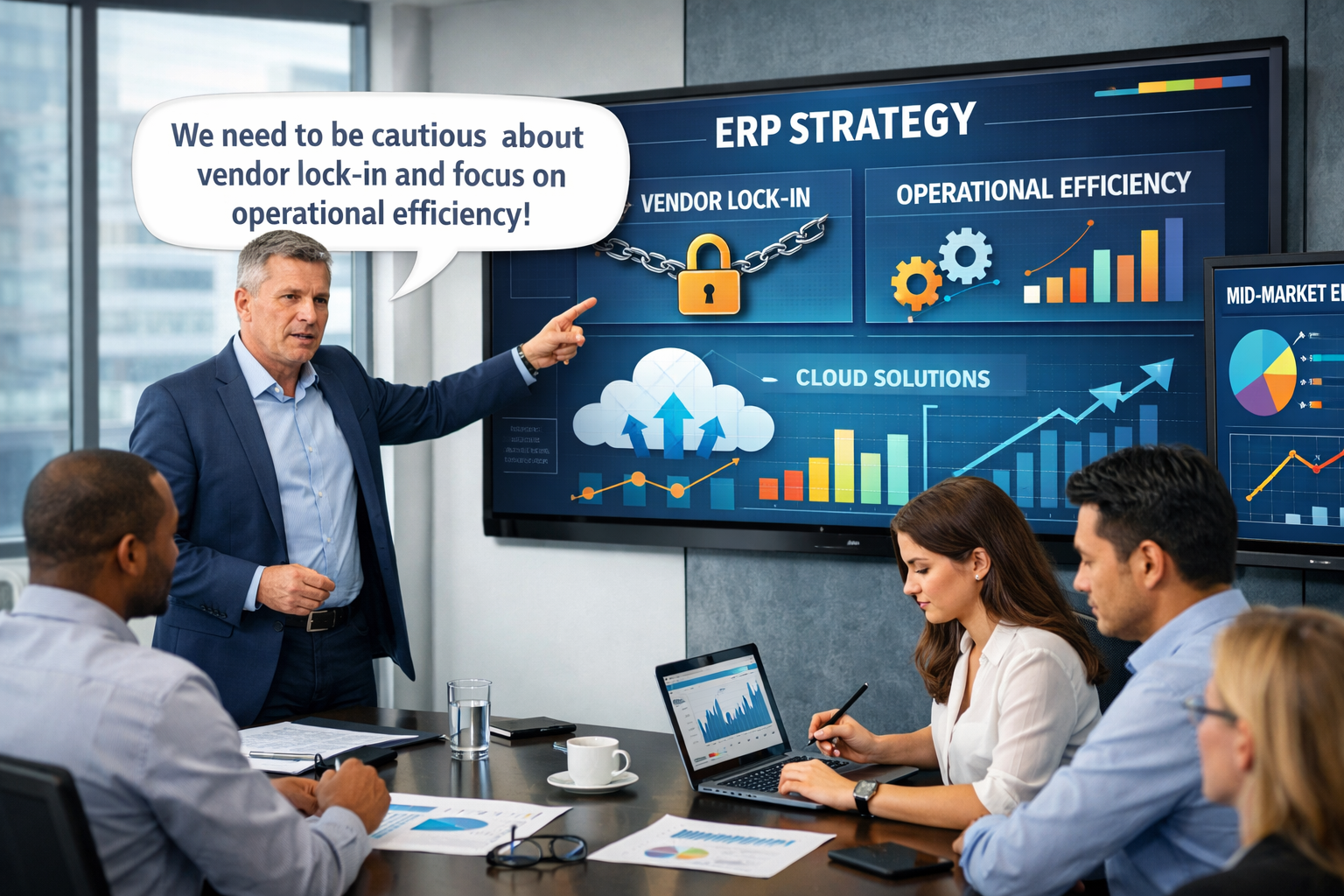
A lot of firms call themselves "independent," but the term gets stretched thin. True independent ERP vendor comparison means the consultant has zero financial ties to the software publishers.
- The Red Flag: If a consultant is quietly taking referral fees, implementation kickbacks, or "partnership points" from the big vendors, their advice is compromised from day one.
- The Litmus Test: Ask them point-blank for a written guarantee that they receive $0 in commissions from the software they recommend. You want a vendor-neutral selection process, full stop.
2. Industry-Specific DNA
Mid-sized manufacturing and distribution isn't for generalists. You’re dealing with multi-site inventory, complex BOMs, landed cost tracking, and demand forecasting. If your consultant has to spend billable hours figuring out what "pick-to-light" means, you're paying for their education.
Look for a team that deeply understands mid-sized manufacturing ERP needs. In Australia, that also means they need to navigate the nuances of local supply chains, GST compliance, and the realities of our labour market.
3. A Methodology That Looks Beyond the Software
A weak ERP selection process usually devolves into staring at a massive spreadsheet of 500 "Yes/No" software features. A CFO-grade process focuses on total business transformation and ROI.
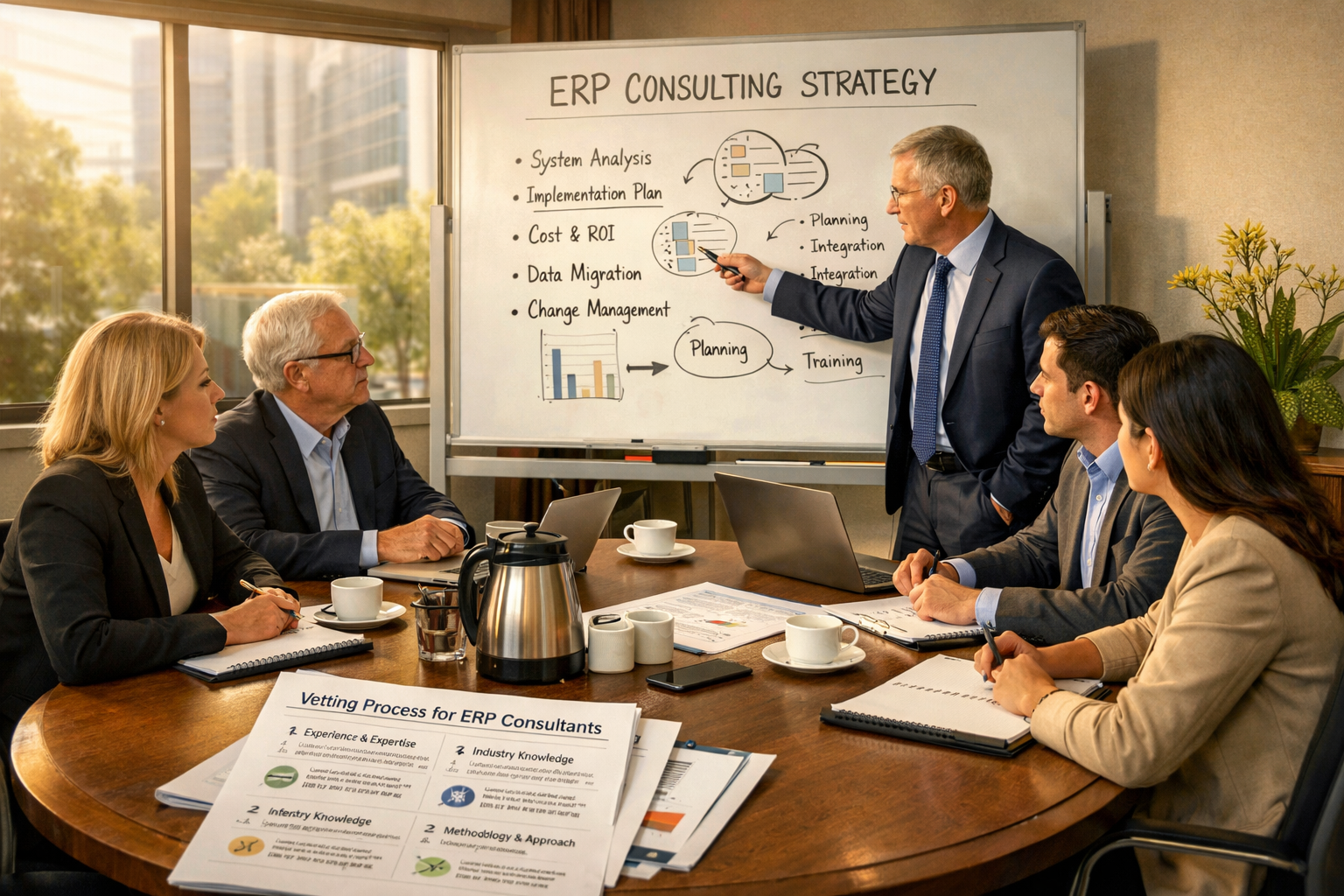
When conducting your CFO evaluation of ERP consultants, look for partners who evaluate the entire ecosystem, including:
- Process Mapping: They shouldn't just ask what features you want; they should be mapping your "To-Be" business processes.
- Complete Infrastructure: Selecting the software is only step one. A top-tier consultant factors in how the new system impacts your wider environment—from hardware requirements and specialised hosting solutions to complex third-party integrations.
- TCO Analysis: They should deliver a full 5-year Total Cost of Ownership breakdown that includes software, internal labour, and realistic contingency budgets.
- Controlled Demos: They force the vendor to run your specific data scenarios, rather than letting the sales rep stick to their rehearsed "best bits" presentation.
4. They Stick Around for the Hard Yards
What happens after the contracts are signed? Far too many consultants vanish the moment the software vendor takes over.
The best manufacturing and distribution ERP consultants offer robust project management and oversight throughout the actual build. They stick around to hold the implementation partner’s feet to the fire, ensuring the promised solution is actually the one being delivered.
The 5-Point Vetting Checklist
Before you sign an engagement letter, run the prospective consultant through this quick checklist:
- [ ] Strict Neutrality: No hidden kickbacks or "preferred partner" status.
- [ ] Manufacturing Pedigree: A proven track record with discrete or process manufacturing.
- [ ] Comprehensive Scope: They advise on the whole picture—selection, project management, hosting, hardware, and integration.
- [ ] TCO Focus: A methodology that prioritises true cost and IRR over a shiny interface.
- [ ] Relevant References: Can they hand over three references from Australian manufacturers with a similar turnover to yours?
Ultimately, ERP selection for mid-sized businesses requires shifting the engagement from a simple "software search" to a strategic de-risking of your company's operational future. Demand a partner who sits firmly on your side of the table.